Showing posts with label Research. Show all posts

Monday, September 29, 2025

Old School Essentials Divine Spell Lists

 Previously I looked at how arcane spell lists work in OSE before creating my Shadowmancer class so now I am considering new cleric spell lists it is time to do the same thing for divine casters.


When it comes to divine casters there is only the Cleric and Druid in official material for OSE and they both have shorter spell lists so while less work, less data to compare. Each class gets access to a total of 30 spells over 5 levels and they share 5 spells although there is some further overlap with spells like neutralize poison vs slow poison. Some what interesting to note is that the druid gets to dispel magic while the cleric does not.


The druid has slightly more defensive spells, otherwise the spell types are broadly similar between classes. 

Saturday, September 27, 2025

Which spells should all clerics have access too?

 If as in my last post we are assuming clerics of different gods will have different spell lists to reflect their patron's domain then what if any spells are common to all clerics?


We can assume there are three categories of spells on the default cleric spells list then, spells shared by all clerics, spells which may be shared and spells which are likely not shared. For the moment I am only interested in the first category.

1st levelcure light wounds*
detect evil
detect magic
light*
protection from Evil
purify food and water
remove fear*
resist cold

At first level you can make a definite case for detect magic to be shared, it is the most utilitarian of spells, cure light wounds seems like an obvious one as well although that may be partly a tendency for players to have an ingrained feeling that clerics should be heal bots. I suppose I could see the case for putting the fear of your god into someone and there by removing it too, this is not exactly how the spell is written even if it could be imagined that way. Detect evil and protection from evil feel like they could be shared spells although they may be not fit with some domains or gods, does the god of death really care about evil or do they have bigger concerns beyond mortal morality? The remaining spells all seem to be of the type that is not necessarily shared.

2nd levelbless*
find traps
hold person
know alignment
resist fire
silence 15' radius
snake charm
speak with animals

I can see a really solid argument that none of these spells should be shared between all cleric types. Know alignment is the only one that seems to me it could be an always shared spell however again, some domains may be above mortal morality.

3rd levelcontinual light*
cure disease*
growth of animal
locate object
remove curse*
striking

Considering level three I think that to curse or remove a curse would be something all faiths could do and I am leaning towards curse disease being on the list too but could be convinced otherwise. Healing the faithful be that wounds or disease seems like a common trait to most domains, again death being an obvious one where I could see an argument that a tenant of the faith that it is forbidden to interfere with the coming of the inevitable or some such.

4th levelcreate water
cure serious wounds*
neutralise poison
protection from evil 10' radius
speak with plants
sticks to snakes

At level 4 I think we are really only faced with arguments for cure serious wounds and possible protection from evil 10' radius.

5th levelcommune
create food
dispel evil
insect plague
quest*
raise dead*

Finally we hit the big ones. All clerics should be able to commune with their god or compel a quest in my opinion, those both just seems like pillars of being a cleric regardless of who the boss is. A case can be made for dispel evil depending on where you fall on the whole issue of the spells in those evil targeting grouping. 

 To raise the dead is a thorny one, it could be a common spell, certainly popular with players once they attain it however of course the spectre of the death domain hovers where they spell would certainly be heretical. A cleric being able to strike their god's enemy dead in a single spell with finger of death certainly feels thematic, we must remember though that it is already limited to only being able to be used if drastic situations as written.

Ultimately I suppose this all comes down to what is the common fantasy of being a cleric.

Wednesday, September 24, 2025

On Clerics, Domains and Flavour.

 One thing I do not like about the simplification of OSE or b/x is the setting implications of the default cleric. They are just a bit too obviously coded towards a type of religion and biblical miracles. Flavour and specificity are the key to an engaging world in which to game, the default cleric just lacks that. Gavin Normal has done a great job with converting the cleric to Dolmenwood but that is a world with one church to rule them all, at least in the part of the setting we see, both in our own history and many fantasy settings there is plenty of polytheism which is not really served this way. 


In the past I have noodled around at alternate OSE or b/x clerics and paladins for different types of gods without going so far as to dip into doing full spell lists for them. Now I am thinking about going all the way which leads to wondering about how far to go with what makes up a god's domain or portfolio.


Your world has a pantheon, maybe several, you want your gods, their clerics and paladins to be distinct. What makes a domain? How many domain types is too many to pick from? Do you want a nature god, should there be animal and plant gods, are those distinct from nature as a domain? Does the tempest domain covering both sea and storm really work? What do you do when your gods have mixed domains?


I personally think that the more granular you get the more flavourful the world you are gaming in gets.  In the past on this blog I have had clerics of winter, a paladin of harvest and a cleric of festivals for example. You can look at the past attempts D&D has taken at putting real world pantheons into D&D to make them playable settings. The fifth edition DMG takes the Norse god Uller, god of hunting and winter and makes them a CN nature god which is just naff in my opinion. Is alignment really the only distinct mechanical feature that Uller has compared to Skadi, god of earth and mountains, in the same pantheon?


 If there is a god of winter I want clerics of winter, not some half hearted "that is elements of nature so you go under the nature clerics". My own homebrew world has large swathes of the world where people worship saints rather than gods, these saints can be even more specific such as a saint of bees so would a cleric of the saint of bees be just another nature cleric, a cleric of animals or something else entirely? How helpful is that as an approach? 


When it comes to spell lists you can be a bit mix and match, that is easy enough to comprehend assuming you have spell lists to start from. In my own setting Saint Ulger the Winter Wolf is both a saint of winter and war so you can rule a cleric of Saint Ulger picks spells from either the winter or war cleric spells list but what do we do about class features? My own Cleric of Winter and Cleric of War can be found on the blog, how would I mash them up for a cleric of Saint Ulger? 


 I suppose one solution would be to have different churches or temples that emphasise different aspects of a god or saint, the church of Saint Ulger the Hardy focuses on the aspects of winter in the saint's portfolio while the church of Saint Ulger the Victorious focuses on the aspects of war in the saint's portfolio and you have some potential for drama there. 


Of course it is the OSR, sort it out yourself is a good first rule but I would like some tools or elements to pick from rather than have to start over from first principles each time. So I am really trying to come up with a decent starting list of domains to work from.


Some comparison for domain lists from later editions of D&D.


Third edition

Air, Animal, Chaos, Death, Destruction, Earth, Evil, Fire, Good, Healing, Knowledge, Law, Luck, Magic, Plant, Protection, Strength, Sun, Travel, Trickery, War, Water


Fifth Edition

Arcana, Death, Forge, Grave, Knowledge, Life, Light, Nature, Order, Peace, Tempest, Trickery, Twilight War


Neither list is entirely what I am looking for but they provide a good starting point. I definitely want the likes of winter or festivals in there, they are flavourful by being reflective of culture and provide interesting gameable options. 


All of which is to say this entire blog post is a distraction from me actually working on that list. Something to chew on if nothing actually formulated.


Monday, February 27, 2023

Does it dungeon? Egypt edition

 A further example of the problem of real world locations as dungeon layouts.


First we have King Tut's burial tomb, one of the most famous real world tombs.


Only really has five rooms and no loop, not a great dungeon really now is it?


Then we have the great pyramid of Giza.


It sort of has a loop in it but not a very interesting one.


Ancient dungeon designers are not really doing great for good game play.

Monday, January 30, 2023

Old School Essentials Arcane Spell lists

 If you have ever thought about making a class that requires a whole new spell list then it is worth considering how the existing ones work. With the release of the Necromancer play test material we now have three arcane spell lists to compare. So lets dig in and see what conclusions we can draw from three data points.


The Very Basics


 Arcane magic user classes get access to a total of 72 spells per class. This breaks down to 12 spells over 6 levels. That means if you want to make a new arcane spell caster with a unique spell list they need access to 72 spells but how many of those are repeats of existing material? Turns out not necessarily a lot.


The illusionist gets 11 spells that are on the magic user spell list while the necromancer gets 10 spells that are on the magic user spell list. Common duplications are Read magic, detect magic and dispel magic. Read magic is given at level 1 as it is for the magic user however both detect magic and dispel magic are given to the specialist mages a level later, 2nd and 4th level respectively. Worth noting that instead of detect magic at first level the illusionist gets detect illusion while the necromancer gets detect undead.


 So the first thing you need to keep in mind when creating the spell list for a new arcane class is you actually only need at most 69 new spells and you can lower this number by taking appropriate spells from the magic user list though you probably want to keep these further spells less than 10.


 One difference between the illusionist and the necromancer is that all other spells taken from the magic user list that the necromancer uses are given at the same level as they are for the magic user, with the illusionist the spells hallucinatory terrain and project image are given at a lower level. For the magic user hallucinatory terrain is a 4th level spell and project image a 6th level spell while for the illusionist they are 3rd and 5th level spells respectively. This lines up with the AD&D PHB spell lists for the magic user and illusionist, I am not sure where the inspiration for the necromancer comes from as it does not match up with the dragon magazine death master of the period when it comes to spell lists.


Spelling It Out


 We all love a good damage spell, or at least I do anyway. The fact remains that most spells in the spell lists in OSE are not really damage spells. In reviewing the different spell lists I broke the spells down into four types of spell: control, damage, defensive and utility. Now these classifications can get a bit muddied when it comes to spells like wall of fire/ice which is both a control and a damage spell so you need to the following with a pinch of subjective salt.


Here is the break down by level of the spell types for the different classes.


In total each class gets the following types of spells:

Magic user: 17 control spells, 9 damage spells, 9 defensive spells, 37 utility spells

Illusionist: 25 control spells, 6 damage spells, 12 defensive spells, 29 utility spells

Necromancer: 12 control spells, 18 damage spells, 9 defensive spells, 32 utility spells.


These are only rough numbers due to the grey area issues mentioned earlier. The necromancer comes out with so many damage spells likely because I counted spells that summon as damage spells as the creatures summoned usually are the damage dealing type.


Depending on the type of class you are making I would use the above numbers as upper and lower bounds for the types of spells you should have, for example between 9 and 12 defensive spells on the spell list is something you should aim for. Nine defensive spells seems to be the "standard" with the illusionist being a bit more of a defensive class.


Levelling It Out


 After breaking down by class it seems the next important thing to do is look at the variation in types of spells by levels. Are some levels more focused at a specific type of spell than others?


Level One: Comparing the different lists it looks as though half your level one spells should be utility spells. How the remaining spells splits depends on your class, the necromancer leans towards damage, the illusionist to control and the magic user splits it 3, 2, 1 in favour of control, defence and damage.


Level Two: Damage spells are nearly non-existent at level 2, only the necromancer gets a damage spell in the form of Choke. The illusionist has an even split between the remaining types while the magic user and necromancer lean heavily on utility spells at this level.


Level Three: This level half the spells are utility spells for the magic user and illusionist while the necromancer only has two utility spells, instead leaning to a fairly even split over the other types. The illusionist favours both control and defensive spells while the magic user again goes for a 3,2,1 split this time favouring defensive spells. At this level all classes have 3 defensive spells which is something to keep in mind.


Level Four: This is a murky level, the magic user gets 7 utility spells and 5 control spells however some of those control spells can do damage. The necromancer goes 2/3 utility spells while the illusionist gets a fairly even split and a return to damage spells. 


Level Five: For all classes you get roughly half your spells as utility spells at this level. It is a big damage level for magic users and necromancers with 3 and 4 spells respectively. Defensive spells are only given at this level for the illusionist.


Level Six: A slight tone back for utility spells at this level. The necromancer splits evenly between damage and defensive spells while the illusionist favours control and the magic user damage.


 It is difficult to draw hard and fast rules from the data, there are some guidelines you should be able to tease out at least.


 Balancing It Out


 We can run the maths on some spell types for comparison, some spell types are more illusive than others when it comes to balance however. Utility spells are the worst offenders for issues on balance. How do you really gauge the power of locate object (2nd level magic user) and glamour (1st level illusionist)? 


Looking at damage spells things get a bit iffy when we start looking at the summon spells. Just looking at 1st level spells the necromancer chill touch does 1d4 plus a point of strength damage while command dead is going to bring you 2d6 creatures that do 1d6 damage per round on a hit, for the illusionist you do 1d4 damage with chromatic orb and attacks against the target get a +2 to bonus while for the magic user we have the old magic missile with 1d6+1 damage. Seeing how the balance of chill touch, chromatic orb and magic missile work is fairly easy to tease out, when you add the summons though it gets a bit confusing.


I am not going to get into the full granular analysis here (because who has time for that right?) but you get the idea. Once you have designed the broad strokes of your spell list you have to go on a level by level and case by case basis to figure out how to balance the actual effects of new spells you want to include.


 Other Data Points?


 Now there are some other data points we could consider in our analysis such as the Vivimancer and Elementalist spell casters Gavin Norman previously released for Labyrinth Lord. The problem with these is they do not adhere to the later settled upon spell list sizes for OSE meaning some levels have too many spells and others too few for direct comparison. For balance comparison I expect you can use these, and I may well do so in the future, you just can not use these classes for spell list construction comparison in a one to one fashion.


  Then you get into the other wizardly sub types that appeared scatted across Dragon magazine and various other TSR products in the AD&D era as well as the odd option in White Dwarf magazine. Again these will suffer from non standard spell list sizes and some wonky balance as they are often suggested as "NPC" classes whoever they provide decent inspiration.


A Kind of Magic?


 Final conclusions, you are probably going to need around 60 new spells for a new arcane caster class and it is going to take a lot of work balancing out the effects of the spells, not something you should attempt lightly. Hopefully this dive into existing spell lists gives you an idea of where to start at least.


 Will I be attempting my own caster classes? It is tempting but rather a lot of work so don't hold your breath. Divine casters have less spells in their spell lists, may be I should start there instead rendering all this waffle useless! 

Saturday, September 10, 2022

The Monk - Part 6: Making an OSE or B/X Monk


 After looking through the various incarnations of the monk/mystic there are some elements that stand out as must have features:


 * No armour

 * Access to some thief skills

 * Restrictions on what magic items they can keep

 * Unarmed combat abilities


It is the last point that I think is the hardest to deal with as it comes with the assumption that monks can also use any weapon. This is both hard to balance and design around, the ideas that monks can use weapons but that their unarmed strikes need to be at least as good as or possibly better than the other options. How do we make it so there is a meaningful choice between the two? Should it even be a choice? 


 There are some elements I am pretty clear on but this balance between unarmed and armed combat for the class is what I think most people struggle with. We have this confused fantasy we are trying to achieve of a mish mash of different kung fu films all smooshed through the lens of the B/X chassis. 


 In many editions there are so many monk abilities it would never be possible to fit them all on a B/X class, it would be nice to retain some of them or even all of them in some way. This could be done by reflecting the different traditions of orders that monks belong to. In the carcass crawler mutoid class there is a table where you roll for mutations on your character, something like this could be an interesting feature for a monk class to reflect the different types of monk orders. Likely this will be hard to fit with the other XP costings and is something I will cut for now.


 Ideally I would like to keep the XP cost for the class to get to level 2 as something around 2500, that would keep the class in line with the Barbarian and just below the Paladin, two classes are think are roughly comparable. 


 Some of the abilities that monks have had in past editions also just do not have anything at all like them currently in OSE which makes it hard for me to gauge what sort of "cost" these abilities should have when it comes to XP, this may also be a factor as to which abilities I end up including.

Thursday, September 8, 2022

The Monk - Part 5: Rules Cyclopedia Mystic


 Released in 1991 I believe, this is going to be the last monk we will look at and probably the most relevant.


The Rules Cyclopedia class reverts to the mystic name, having strength and dexterity as prime requisites while also needing a min score of 13 in dexterity and wisdom. Mystics get a D6 for hit dice and now not only can they no longer wear armour they also can not use any magic items that offer protection! We are told 75% of mystics are lawful, seemingly there being no alignment requirement.


 As a mystic levels it naturally improves it's AC, movement, number of attacks and unarmed strike damage. Mystic's unarmed strikes also start to count as magical weapons for the purposes of damaging invulnerable creatures. A mystic does 1d4 damage at first level with unarmed strikes and tops out at 3d12 at 16th level where it has 4 attacks a round!


Mystics get some optional acrobatics abilities at the cost of -20% experience points earned. This comes in the form of Acrobatics Check = d% roll vs. ([3 * Dex] + [2 x Lvl]), a return to annoying formulas rather than a straight table. The rules do suggest you could also just do it by a roll under dex check on a d20 which is probably far better.


As standard a mystic gets the following thief abilities: Find Traps, Remove Traps, Move Silently, Climb Walls, and Hide in Shadows. At 9th level you get access to the special fighter combat options too.


Next we get a fairly familiar set of features as the mystic levels


Gentle touch being the new quivering palm which you can use once a day instead of once a week and can use for charm, cureall, death, quest, or paralysis rather than just death like in previous editions.


There are some tweaks to the previous restrictions on a monk, now instead of having to donate most of your wealth your cloister just straight up owns anything you collect. Once you reach 10th level as a mystic the number of mystics at that level is restricted and you have to beat one in solo combat to actually advance to the new level. Some good news is that when you want to build a stronghold at 9th level, your current cloister will pay for it for you.

As we might have expected this class is the closest to something that might fit in B/X or OSE however it still has way too many abilities.


Tomorrow I try to figure out what the heck I actually want from a monk class and what is achievable!

Wednesday, September 7, 2022

The Monk - Part 4: AD&D 2nd edition's Fighting-Monk


 That is right kids, the monk has been unceremoniously kicked down the road and in 2nd edition it only appears as a kit for the priest (cleric).


So to qualify as a fighting-monk you need to be a priest with 13 dexterity score and as a priest you get a d8 hit dice as well as the ability to cast divine spells for the first time in the class's history!


 Fighitng-monks are barred from using armour, can never own more things than they can carry on their back and must take a weapon specialization in on of the three styles of unarmed combat from The Complete Fighter's Handbook. 


 All of which is to say there is not a lot going on here. We get a few familiar touch stones however this is not a full class and the divine casting abilities are an outlier.


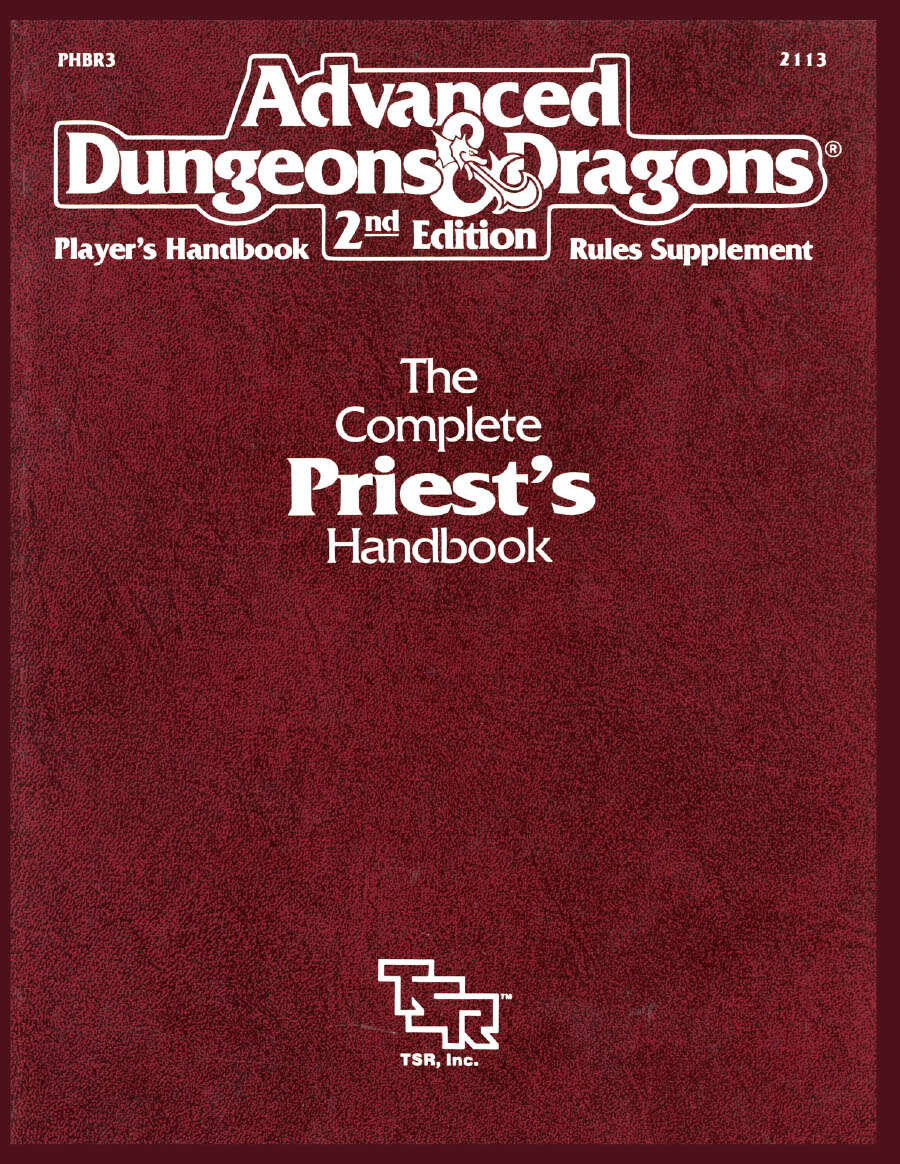
https://www.drivethrurpg.com/product/16888/PHBR3-The-Complete-Priests-Handbook-2e


One last monk to consider tomorrow in part 5 hopefully more useful than this short one! 

The Monk - Part 3: AD&D PHB Monk


Monks are monastic aesthetics who practice rigorous mental and physical training and discipline in order to become superior. 


 To qualify as an AD&D monk we need 15 in strength, dexterity and wisdom with an 11 in con on the side. You are restricted to lawful alignment (if you stray from lawfulness you become a level 1 scrub), gain no bonus XP benefits or dex boosts to your defences.


 Monks attack as a thief, getting an extra 1/2 a point of damage for armed strikes per level and a D4 hit dice (although you get an extra HD at first level). Thief saves are also used for a monk as are a number of thief skills such as open locks etc. Monks also get the extra save of being able to dodge non-magical missile attacks with a save vs petrification.


 Unarmed combat brings back some familiar elements from earlier versions such as the chance to stun or kill. If you hit roll is 5 higher than required you stun the target for D6 rounds. To kill we have the super clunky mechanic of you have to have already stunned a target with hit then roll a D100 and score less than the opponent's AC modified by how many levels over 7 the monk is. Truly the to kill option is a pain to work out and roll at the table in my opinion, the upside is you could theoretically one punch a dragon. The damage from and number of unarmed attacks you can make both increase by level until you can make 4 attacks around for 8-32 at 17th level.


After this comes a whole slew of special abilities I'll bullet point as there are so many of them.

* Speak with animals as druids do (3rd level)

* ESP only has a 30% chance of working on a monk, dropping by 2% per level (starting at 4th level)

* Immune to diseases and Haste/Slow (5th level)

* The ability to mimic death (6th level)

* Limited self heal (7th level)

* Speak with plans as a druids do (8th level)

* 50% chance to save against charm, suggestion etc which increases by 5% per level (starting at 9th level)

* Int set to 18 for purposes of defence against Mind Blast and Telepathy (10th level)

* Immune to poison (11th level)

* Immune to Geas and Quest spells (12th level)

* Once a week you can quivering palm, touch someone for three rounds and if they have less HD than you, they die. (13th level)


After this we get some familiar restrictions. No armour allowed, limited on what treasure they can keep (same as paladin), no to hit or damage bonuses from strength score, no hirelings or henchmen before 6th level, have to win in single combat to progress at higher levels and limits on what you can spend on your stronghold.


Another fiddly version of the class that is largely considered to be weak.


https://www.drivethrurpg.com/product/17003/Players-Handbook-1e


In 1985 AD&D gets a slightly revised version of the PHB monk in Oriental Adventures, it is not different enough that I'll be looking at it though.


Tomorrow we see what 2nd edition AD&D has to offer in part 4.

Tuesday, September 6, 2022

The Monk - Part 2: Mentzer's Master Mystic


Coming as part 4 in the BECMI set (Basic, Expert, Champion, Master, Imortals) is the black box master set designed to take characters from level 26 to 36 this set also contains a monk class of sorts. For master we have ditched the monk as the name and gone with mystic.


Mystics are NPC humans, monastic people who follow a strict discipline of meditation, denial, seclusion, and mastery of the human body. Mystics are skilled in unarmedcombat. They live in cloisters, or lairs.


 We get a whole slew of information on how cloisters are organised so you know exactly how many people make up a cloister and their classes which is nice but not exactly relevant to running a player character.


Mystics advance in levels at the same XP cost as fighters however they are limited to level 16 and after each level up you have to spend 1-6 months back at your cloister to prove you are not just out in the world having too much fun. You only gain XP from treasure if you give it to the needy and 10% of your treasure has to be tithed back to your cloister. So do you lose 10% of the XP you should get from your treasure or are cloisters considered needy?


 When in unarmed combat your unarmed strikes count as silver weapons (2nd level), +1 weapons (5th level), +2 weapons (8th level), +3 weapons (11th level), +4 weapons (14th level) and +5 weapon (16th level) however this is only for the purpose of being able to damage a creature, you do not get any to hit or damage bonuses!


 Mystics do get to use special fighter options such as disarm, stun etc and can use the different martial arts styles from the Companion Set. If you use a dominant style in combat then you get to do double damage unless the opponent saves vs spells. This is adding a level of fiddly onto combat which I do not really like.


 Next you get some acrobatics skills as a mystics. Jumps/leaps, tumbles/falls, dodges, catches (stopping yourself from falling), swings and balances all of which you succeed on a d100 roll that is less than or equal to three times your dex plus two times your level which would have been much better expressed in a table. For the benefit of having these acrobatic skills you earn 20% less XP than a normal mystic.


 And that is it.


 It is a bit of a bare bones, get you started class. By this point you are supposed to be skilled enough as a DM to be able to work it out yourself. No mention given of mystics having to go without armour, what their HD should be, any stat requirements or their saves.


 I like the stuff on how cloisters are organised even if it is not that useful for the class itself. There are some nods to making different orders more unique by having them use different martial arts styles however again this is hand waved and left up to the DM.


https://www.drivethrurpg.com/product/17167/DD-Master-Set-BECMI-ed-Basic


Tomorrow back to calling a monk a monk?

Monday, September 5, 2022

The Monk - Part 1: Blackmoor

 I am starting a new series today looking at the Monk. Hopefully this will end up with me building my own Monk class for OSE/Basic but I think the best way to go about that is look at the roots of the class given the hit and miss nature of its various incarnations.


 Today we start off all the way back in 1975 with Dave Arneson's Blackmoor supplement for the original D&D. We get the first mention of the Monk here in the opening "Men and Magic setting.


Monks (Order of Monastic Martial Arts), a sub-class of Clerics which also combines the general attributes of Thief and Fighting Man.


Right upfront we get the thesis statement of the class. Arneson sees the class as a mix of the thief and the fighter even if it is technically a subclass of the Cleric. So just three classes really to build into one, no problem.

The stat requirements:

* Wisdom must be 15 or more

* Strength must be 12 or more

* Dexterity must be 15 or more

Given we are rolling 3d6 down the line here you are not becoming a monk easily.


Interestingly there is no alignment restriction although Arneson suggests most (75%) monks are lawful. Where the monk does get restrictions is no armour allowed and must treat treasure as a paladin does which is found in the earlier Greyhawk supplement.


Paladins will never be allowed to possess more than four magical items, excluding the armor, shield and up to four weapons they normally use. They will give away all treasure that they win, save that which is necessary to maintain themselves, their men, and a modest castle. Gifts must be to the poor or to charitable or religious institutions, i.e. not to some other character played in the game. A paladin's stronghold cannot be above 200.000 gold pieces in total cost, and no more than 200 men can be retained to guard it.


  Now a monk can use any weapons, you get an extra half point of damage per half level up to 8 points when using weapons! Now the interesting part is when you get to unarmed combat, a hit that is 5 above the target number stuns an opponent 75% of the time for 3-12(!) turns and outright kills them 25% of the time! When making unarmed attacks as a monk you also have your own damage table which ranges between 4 and 40(!) at max level AND can attack twice if you have a higher dex than your opponent.


 Following this you get a whole slew of thief skills as a monk. Open locks, remove traps, listening, climbing, move silently and hide in shadows are all given to a monk in various degrees.


 To put the icing on the cake you get speak with animals (4th level), speak with plants (8th level), simulate death (5th level), self heal (starts at 7th level and improves from there), immune to suggestion and hypnosis (8th level), int set to 18 vs telepathy (10th level), immune to quest spell and geases (also 10th level), once a week you can straight up kill someone by touching them (13th level), save to dodge missiles both physical and magical from 1st level and finally from 8th level if you fail a save you only take half damage.


That is a lot of stuff.


To counter act some of this broken nonsense you have a d4 hit dice, the high starting stat requirement and from 6th level you have to solo a monk of equal level to advance.


Phew, I think that is everything.


There is a lot of flavourful stuff in here, a lot of which make the class pretty damn over powered even if it is a glass cannon. Putting all this into an OSE class would be impossible and in my go against the design philosophy of Basic anyway.  


 Despite being completely over the top there is a lot of stuff I like here and would definitely want to include in my own monk class. The stuff about having to defeat other monks to level up is very flavourful. One thing I am never sure about is having monks use weapons, I like my monks unarmed and finding away to balance between unarmed strikes and weapon using is difficult. 


https://www.drivethrurpg.com/product/17172/ODD-Supplement-II-Blackmoor-0e


Tomorrow we look at a different monk.

Blogging Bandwagon: Maps of Aelwydi

 Prismatic Wastelands has a new blogging bandwagon theme going, this time for maps so here is every finished map of my own homebrew world.